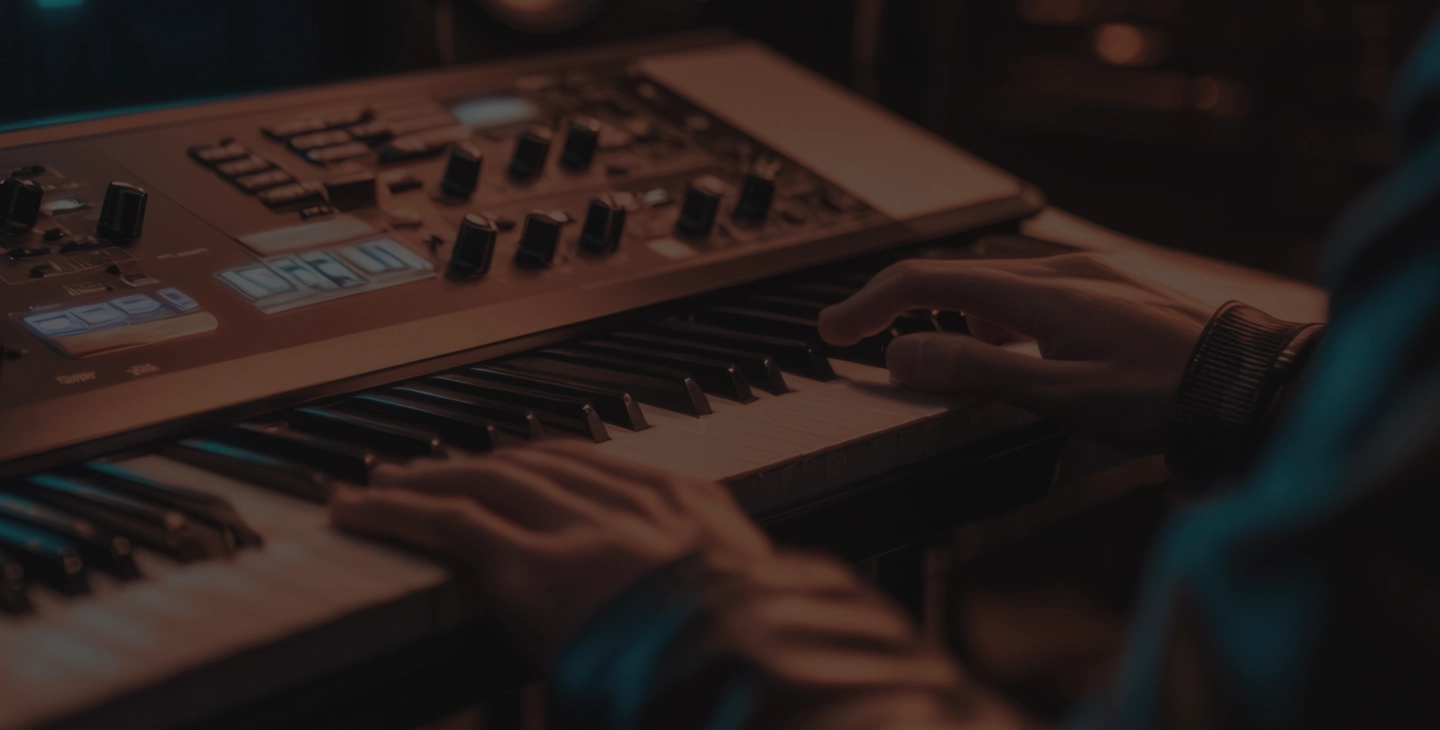
Free Analog instruments Music Generator Powered by AI
Turn text into high-quality Analog instruments music effortlessly – no login required!

music.toolTips
minggu Dierentuin
Sebuah duet 1950-an bernuansa rumba, menceritakan cinta dan kenangan melalui lirik intim, harmoni dekat, dan instrumentasi vintage yang hangat dan melankolis.
02:48
3 days ago
kisah masa lalu
Duet romantis bergaya big band 1950-an, menyampaikan nostalgia cinta dan janji masa lalu melalui harmoni dekat dan aransemen vintage yang intim dan emosional.
02:43
5 days ago
Introduction to Analog Instruments: Definition and History
Analog Instruments refer to musical instruments that generate sound using analog circuits and signals, rather than digital computation. These instruments produce continuous waveforms, giving them a warm, rich, and often unpredictable character that digital instruments may lack. The history of analog instruments dates back to the early 20th century with the invention of electronic instruments such as the Theremin (1920) and Ondes Martenot (1928). The golden era of analog synthesizers began in the 1960s and 1970s, with companies like Moog, ARP, and Roland pioneering modular and semi-modular synthesizers. Analog instruments played a crucial role in shaping electronic music, progressive rock, and experimental sound design, laying the foundation for modern music production techniques.
Sub-tags and Classifications of Analog Instruments
Analog Synthesizers
Analog synthesizers are electronic instruments that use analog circuits and components to generate soundAnalog Instruments Content. They can be modular or fixed-architecture and often include oscillators, filters, and envelope generators. Analog synthesizers are prized for their warmth, harmonic richness, and the subtle imperfections that add character to each note. Iconic examples include the Minimoog Model D, ARP 2600, and Roland Jupiter-8.
Analog Drum Machines
Analog drum machines generate percussive sounds using analog circuitry, often replicating kick, snare, hi-hats, and toms. Unlike digital samplers, these instruments produce natural variations in tone and dynamics, giving drum patterns a unique human-like feel. Classic models include the Roland TR-808, TR-909, and Korg Volca Beats.
Analog Sequencers
Analog sequencers are devices that generate sequences of musical notes or control voltages to drive synthesizers and other instruments. They were widely used in the 1970s and 1980s for creating repetitive melodic and rhythmic patterns. Their tactile interface and step-based programming allow for hands-on experimentation, which is often favored by electronic and experimental musicians.
Electro-Acoustic Analog Instruments
These are traditional acoustic instruments enhanced with analog electronic components to manipulate their sound. Examples include analog-modified electric guitars, organs, and electric pianos. This sub-category combines the natural resonance of acoustic instruments with the sonic flexibility of analog electronics.
Famous Artists and Classic Works Featuring Analog Instruments
Wendy Carlos
Pioneering composer known for 'Switched-On Bach,' which showcased the expressive potential of analog Moog synthesizers in performing classical music, bridging electronic and traditional genres.
Switched-On Bach by Wendy Carlos
This landmark album from 1968 utilized the Moog synthesizer to perform Johann Sebastian Bach compositions. Its innovative use of analog synthesis demonstrated precise control over pitch and timbre while preserving the musicality and expressiveness of classical works. It popularized synthesizers in mainstream music and showed that analog instruments could be both experimental and accessible.
Kraftwerk
German electronic band that defined the sound of analog synthesizers in popular music. Albums like 'Autobahn' and 'Trans-Europe Express' demonstrated the rhythmic precision and melodic innovation of analog instrumentation.
Autobahn by Kraftwerk
Released in 1974, 'Autobahn' showcased the possibilities of analog synthesizers and sequencers to create rhythmically intricate, melodic electronic music. The album's analog instrumentation, combined with early electronic effects, influenced genres such as techno, synth-pop, and ambient music.
Jean-Michel Jarre
Electronic music composer famous for using analog synthesizers to create immersive soundscapes, with works like 'Oxygène' and 'Équinoxe' influencing ambient and electronic music worldwide.
Oxygène by Jean-Michel Jarre
This 1976 album utilized a range of analog synthesizers, including ARP and EMS models, to produce expansive electronic soundscapes. The analog nature of the instruments contributed to the warm, organic feel of the tracks, making them timeless examples of analog synthesis artistry.
Vangelis
Composer known for cinematic analog synth scores, particularly 'Blade Runner' and 'Chariots of Fire,' blending analog textures with orchestral elements to evoke emotional depth.
Blade Runner Soundtrack by Vangelis
Vangelis crafted the soundtrack using a mix of analog synthesizers to evoke futuristic, atmospheric textures. The expressive analog tones, combined with creative use of sequencing and layering, contributed to the film’s iconic mood and influenced countless film and game soundtracks.
Application Scenarios for Analog Instruments Music
Analog instruments are widely used in film scoring to create immersive, emotional, and futuristic soundscapes. Their warmth and unpredictability help composers convey tension, nostalgia, or otherworldly atmospheres in cinematic experiences.
Movie Soundtracks
Brands often utilize analog instruments in commercials to evoke retro aesthetics or convey warmth and authenticity in jingles, background music, or promotional content. The organic sound of analog synthesis can make advertisements stand out.
Advertising Music
Analog instruments are employed in video game soundtracks to provide dynamic, evolving textures and immersive atmospheres. Retro-inspired games often mimic classic analog sounds, while modern games use analog synths to enrich electronic or ambient layers.
Video Game Background Music
Many electronic musicians and bands use analog synthesizers and drum machines during live performances to deliver hands-on, improvisational music. Analog instruments allow performers to manipulate sound in real-time, creating unique experiences for audiences.
Live Performances and Electronic Music Sets
Analog instruments are a staple in experimental music and ambient compositions due to their ability to generate evolving textures, drones, and unconventional tones that are difficult to replicate digitally.
Experimental and Ambient Music