Free Economic crisis Music Generator Powered by AI
Turn text into high-quality Economic crisis music effortlessly – no login required!

music.toolTips

AUX PRISES AVEC LA CRISE
Cette chanson utilise une métaphore humoristique et mordante pour comparer une crise économique à une électrocution. Entre satire sociale, anxiété financière et absurdité contemporaine, le narrateur raconte sa confrontation involontaire avec les mécanismes complexes de l'économie moderne.
04:03
2 days ago
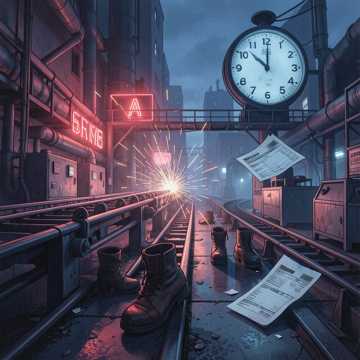
Mis à pied demain
Ce morceau punk rock français dépeint la peur collective du licenciement, la tension au travail et la colère sociale. Entre riffs nerveux, chœurs hurlés et paroles crues, il capture l’angoisse moderne d’un monde professionnel en chute libre.
02:13
3 days ago

O desemprego no brasil
Uma música animada e socialmente consciente que retrata os impactos do desemprego no Brasil, destacando fome, evasão escolar e desigualdade, enquanto transmite esperança, união e a importância da educação e do trabalho para transformar a nação.
03:23
4 days ago
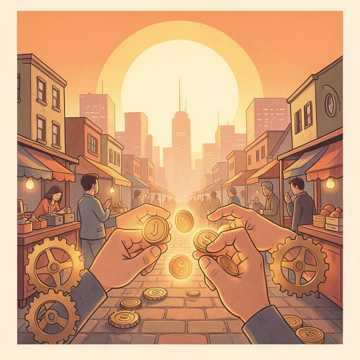
O desemprego no brasil
A música retrata os impactos do desemprego no Brasil, abordando fome, evasão escolar e desigualdade. Com vocais harmonizados e clima de coral, transmite dor coletiva, crítica social e esperança de transformação através do trabalho e da educação.
04:04
4 days ago

desemprego
A música retrata o impacto do desemprego nas famílias brasileiras, abordando fome, evasão escolar e perda da infância, mas também reforçando esperança, união e resistência popular através de um refrão forte e emocional.
02:50
5 days ago
Economic Crisis Music: Definition, History, and Cultural Evolution
Economic Crisis music is a thematic music tag used to describe songs, soundtracks, and experimental compositions that reflect financial collapse, unemployment, recession, social instability, inflation, debt, poverty, and the emotional consequences of economic downturns. The Economic Crisis music tag is commonly associated with politically conscious music, protest music, industrial soundscapes, dark ambient compositions, socially critical hip-hop, post-punk, and cinematic orchestral scores. The origins of Economic Crisis music can be traced back to the labor songs and protest folk traditions of the early 20th century, particularly during the Great Depression of the 1930s. Artists used music to express public frustration, working-class struggles, and dissatisfaction with financial systems. During the post-war era, Economic Crisis themes evolved into politically charged rock, blues, and jazz compositions addressing unemployment, inequality, and urban decline. In the late 1970s and 1980s, punk rock and industrial music expanded the Economic Crisis musicEconomic Crisis Music aesthetic by introducing aggressive instrumentation, dystopian lyrics, and anti-capitalist themes inspired by inflation, deindustrialization, and rising unemployment. In modern music culture, Economic Crisis music has become increasingly relevant due to global recessions, financial crashes, housing crises, and widening wealth gaps. Contemporary Economic Crisis music frequently appears in film soundtracks, documentary scores, electronic music projects, indie rock albums, and socially conscious rap releases. The Economic Crisis tag is now recognized as both a lyrical theme and an atmospheric musical style that captures tension, despair, uncertainty, resilience, and social commentary.
Economic Crisis Music Sub-tags and Classifications
Depression Era Folk
Depression Era Folk is one of the earliest and most influential Economic Crisis music sub-tags. This classification includes acoustic folk songs centered on poverty, unemployment, labor rights, migration, and survival during economic collapse. Characterized by simple instrumentation and storytelling lyrics, Depression Era Folk music often reflects working-class experiences during the Great Depression and similar historical downturns.
Political Protest Music
Political Protest Music is a major Economic Crisis music classification focused on social inequality, corporate corruption, austerity policies, and government failures. This sub-tag spans genres such as folk rock, punk, hip-hop, and reggae. The music often features direct political messaging, revolutionary themes, and calls for social change during times of financial instability.
Industrial Economic Crisis
Industrial Economic Crisis music combines harsh electronic textures, mechanical rhythms, distorted vocals, and dystopian sound design to portray urban decay, dehumanization, and capitalist collapse. This sub-tag became prominent during periods of industrial decline and economic restructuring in the late 20th century. The music creates a cold, oppressive atmosphere associated with financial despair and social fragmentation.
Dark Ambient Recession Music
Dark Ambient Recession Music focuses on atmospheric tension, isolation, and emotional uncertainty linked to economic hardship. Using drones, minimalist compositions, synthetic textures, and cinematic soundscapes, this Economic Crisis sub-tag is commonly used in documentaries, films, and video games exploring dystopian futures, financial collapse, or societal instability.
Conscious Hip-Hop and Economic Commentary
Conscious Hip-Hop and Economic Commentary is a modern Economic Crisis music classification that examines poverty, wealth inequality, systemic racism, unemployment, and urban economic struggles. Artists in this sub-tag use lyrical storytelling, social critique, and emotionally charged production to discuss the realities of economic marginalization and financial injustice.
Post-Punk Economic Anxiety
Post-Punk Economic Anxiety music emerged during periods of recession and social instability in the late 1970s and early 1980s. This sub-tag features minimalist guitar work, anxious rhythms, detached vocals, and bleak lyrical themes centered on alienation, unemployment, and declining urban environments.
Cinematic Financial Collapse Scores
Cinematic Financial Collapse Scores represent orchestral and electronic soundtrack music designed for films and television productions about stock market crashes, corporate scandals, economic disasters, and social unrest. These compositions often use dramatic crescendos, minimalist piano motifs, and suspenseful textures to amplify themes of uncertainty and instability.
Famous Artists and Classic Works Related to Economic Crisis Music
Woody Guthrie
Woody Guthrie is one of the foundational artists associated with Economic Crisis music. His songs documented the hardships of the Great Depression, labor exploitation, and mass migration in the United States. Works such as 'Dust Bowl Refugee' and 'Do Re Mi' became iconic representations of economic struggle and working-class resilience.
Dust Bowl Ballads - Woody Guthrie
This landmark folk album is one of the earliest classic Economic Crisis music works. It documents the human suffering caused by environmental disaster, unemployment, and forced migration during the Great Depression. The album's stripped-down acoustic arrangements emphasize lyrical storytelling and emotional authenticity, creating a timeless portrait of economic hardship.
Bob Dylan
Bob Dylan contributed significantly to the Political Protest Music branch of Economic Crisis music. His socially conscious songwriting addressed inequality, war, unemployment, and social unrest. Songs like 'The Times They Are A-Changin'' became cultural anthems during periods of political and economic instability.
The Times They Are A-Changin' - Bob Dylan
This influential protest song became symbolic of political and economic transformation during the 1960s. The composition combines folk simplicity with universal social commentary, making it a defining work within Political Protest Economic Crisis music. Its emphasis on social change and generational conflict continues to resonate in modern economic discussions.
Public Enemy
Public Enemy helped define conscious hip-hop within the Economic Crisis music landscape. Their music examined systemic inequality, racial injustice, economic marginalization, and urban poverty. Their aggressive production style and politically charged lyrics expanded the influence of Economic Crisis themes in modern music.
Fight the Power - Public Enemy
This groundbreaking hip-hop track expanded the scope of Economic Crisis music by linking economic inequality with racial injustice and systemic oppression. The song's dense production, layered samples, and confrontational lyrics established a new model for politically engaged music in urban culture.
Nine Inch Nails
Nine Inch Nails introduced industrial and dystopian aesthetics into Economic Crisis music. Trent Reznor's compositions explored themes of alienation, consumerism, emotional collapse, and social decay through harsh electronic production and experimental sound design.
OK Computer - Radiohead
Although often categorized as alternative rock, 'OK Computer' is widely recognized as an influential Economic Crisis music work because of its themes of alienation, consumer anxiety, technological control, and social fragmentation. The album introduced atmospheric experimentation and existential commentary that shaped modern dystopian music aesthetics.
Radiohead
Radiohead became closely associated with modern Economic Crisis music due to their exploration of capitalism, technological anxiety, globalization, and emotional disconnection. Albums such as 'OK Computer' and 'Kid A' reflected growing fears surrounding economic uncertainty and societal transformation.
The Downward Spiral - Nine Inch Nails
This industrial masterpiece captures emotional and societal collapse through distorted production, aggressive electronic textures, and psychologically intense songwriting. The album became a defining example of Industrial Economic Crisis music, reflecting fears of dehumanization and social breakdown.
Kendrick Lamar
Kendrick Lamar modernized Economic Crisis music through socially conscious hip-hop narratives addressing poverty, institutional inequality, and economic survival. His lyrical complexity and cinematic production style have made him one of the most influential contemporary artists connected to Economic Crisis themes.
To Pimp a Butterfly - Kendrick Lamar
This critically acclaimed album combines jazz, funk, spoken word, and hip-hop to examine economic inequality, racial identity, exploitation, and personal survival. Its layered production and conceptual storytelling elevated Economic Crisis music into a sophisticated contemporary art form with broad cultural impact.
Application Scenarios for Economic Crisis Music
Economic Crisis music is frequently used in films about financial collapse, social unrest, political corruption, and dystopian futures. Dark ambient textures, industrial rhythms, and emotionally heavy orchestral compositions help create tension, realism, and psychological depth in cinematic storytelling.
Movie Soundtracks
Documentaries about recessions, labor movements, unemployment, inequality, and global finance often use Economic Crisis music to reinforce emotional narratives and historical context. Folk protest songs and minimalist atmospheric scores are especially common in investigative documentaries.
Documentary Background Music
Economic Crisis music appears extensively in dystopian, cyberpunk, post-apocalyptic, and political simulation games. Industrial electronic music and dark ambient soundscapes help establish immersive worlds characterized by financial instability, societal collapse, and urban decay.
Video Game Background Music
Brands, nonprofit organizations, and social awareness campaigns sometimes use Economic Crisis music to highlight themes of resilience, recovery, sustainability, and social responsibility. Emotional piano compositions and cinematic soundtracks are commonly selected to communicate empathy and urgency.
Advertising and Social Campaigns
Experimental theater productions and political performance art frequently incorporate Economic Crisis music to support themes of inequality, migration, labor exploitation, and social resistance. Live industrial music, spoken word, and folk-inspired arrangements are especially effective in immersive performances.
Theater and Performance Art
News programs, economic analysis podcasts, and investigative journalism productions use Economic Crisis music to establish serious, dramatic, or reflective moods. Minimal electronic textures and subtle orchestral scores enhance audience engagement while emphasizing financial and political themes.
Podcast and News Production
Museums and multimedia art installations exploring economic history, industrial decline, or social inequality often use Economic Crisis music as part of immersive audiovisual experiences. Ambient and experimental compositions help audiences emotionally connect with historical and contemporary economic realities.
Art Installations and Museums