Free D# minor Music Generator Powered by AI
Turn text into high-quality D# minor music effortlessly – no login required!

music.toolTips
Un muchacho
Una balada lenta y emotiva sobre un muchacho solitario de ojos tristes. Entre voces delicadas, rap confesional y texturas de vinilo, la canción transmite empatía silenciosa, acompañando el dolor ajeno con ternura y comprensión compartida.
03:49
3 hours ago
Chrome Psalm
Chrome Psalm fuses neurofunk, grindcore, and drum & bass into a raw, glitch-infused journey, blending snarled rap, soulful hooks, and smoky digital textures for a chaotic, immersive sonic experience.
03:22
11 hours ago
Signal Rot
'Signal Rot' merges brutal neurofunk and digital grindcore with soulful vocals, glitch effects, and heavy drum patterns, exploring identity, decay, and raw emotional catharsis in a distorted, high-intensity sound world.
04:19
11 hours ago

i love you (C)
A heartfelt techno-infused love ballad, 'i love you (C)' captures timeless devotion with intimate vocals, gentle beats, and ambient textures, expressing enduring affection across past, present, and future.
04:31
12 hours ago

Invitation on Baku
Легкая и игривая песня в D minor приглашает всех отдохнуть в Баку, подчеркивая радость отпуска и беззаботность жизни.
00:40
Invalid date

Степь
Энергичный трек, соединяющий рэп и электро, раскрывает одиночество, внутренний поиск и желание найти своё место среди суровой природы и осуждающего общества.
04:45
14 hours ago
xit top
Xit Top - yurak portlashi, adrenalin va g‘alaba og‘rig‘i bilan to‘la, neon shahar kechalari fonida o‘sib borayotgan ichki kurash va ruhiy jasoratni ifodalaydi.
03:20
2 days ago
L'Odio
Una ballad soul italiana che riflette sul peso dell'odio e sulla liberazione attraverso l'amore, tra malinconia luminosa e delicatezza sonora.
04:34
2 days ago
huile_2
Un hymne spirituel afro-soul et gospel, célébrant la consécration totale à Dieu, mêlant émotion, louange et mélodie lumineuse pour inspirer dévotion et gratitude.
06:50
3 days ago
相思入画
《相思入画》以古筝与笛子为主线,融合戏腔与清亮男声,描绘红尘相思与岁月痴情的唯美意境。
03:20
3 days ago
smile
A cinematic gothic metal anthem portraying a female protagonist transforming sorrow into controlled, righteous fury, returning a haunting smile to those who caused her pain.
06:13
3 days ago
Carmesi
A grieving soul transforms pain into strength after losing the only person who understood them. Through haunting piano, explosive metal choruses, and cinematic tension, 'Carmesi' evolves from numb sorrow into a chilling vow of vengeance and self-reclamation.
05:09
3 days ago
The_Lost_Dream_and_the_Torn_String
An instrumental descent through loss and fractured memory, driven by slow ambient guitar textures, evolving bass solos, dissonant harmonics, and collapsing melodies. The final broken-string twang leaves a lingering sense of emotional ruin and silence.
05:07
3 days ago
The_Lost_Dream_and_the_Torn_String
A dark instrumental odyssey where drifting ambient guitars, mournful bass solos, and fractured harmonics portray the collapse of hope. The slow-burning arrangement evolves from fragile introspection into emotional devastation, ending with a symbolic broken string fading into silence.
08:00
3 days ago
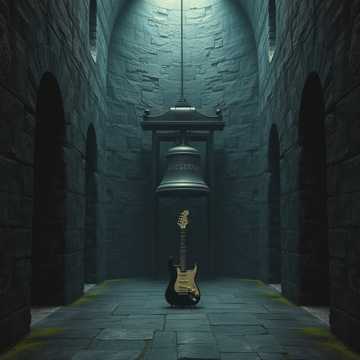
Gallows Bell Loop
A slow, dark medieval instrumental loop in D minor; iron bells and sparse guitar evoke sorrow and ancient stone atmospheres, designed for seamless cinematic repetition.
04:14
3 days ago
Пока без названия
Агрессивный сатирический рэп-трек о современном рабстве, бедности и бессмысленной гонке за выживанием. Через чёрный юмор, абсурд и мрачный West Coast звук песня высмеивает культ продуктивности, потребления и фальшивые истории успеха.
04:19
3 days ago

T
'T' é uma imersão emocional no fundo do oceano, combinando batidas lo-fi e vocais picotados femininos para transmitir sensação de fascínio, perda e contemplação em um mar de luz e escuridão.
01:50
4 days ago
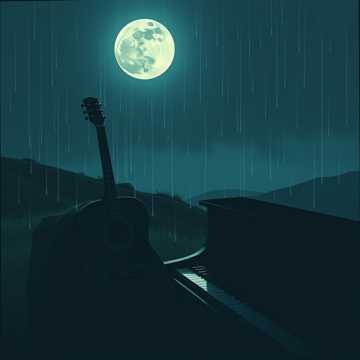
unà dii àvarà à ciàmbà
A melancholic folk rock piece in D minor, exploring longing, love, and introspection through baritone vocals, piano, and orchestral layers, blending modern rhythms with timeless emotional depth.
03:35
4 days ago
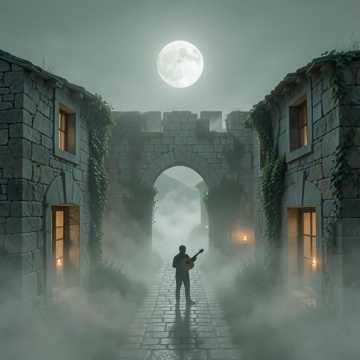
unà dii àvrà à ciàmbà
Una ballata intensa e nostalgica che attraversa notti silenziose, ricordi dolorosi e speranze fragili. Tra chitarra, pianoforte e atmosfere folk medievali, il protagonista cerca conforto, amore e redenzione in un mondo segnato dalla solitudine.
03:06
4 days ago
Danse en ré mineur
A neoclassical chamber piece in D minor, 'Danse en ré mineur' features graceful piano arpeggios and soaring strings, blending intimacy and elegance in a tender, luminous musical journey.
03:37
4 days ago
Introduction to the D# Minor Tag: Definition and Historical Overview
D# Minor is a key in Western music theory that is defined by a key signature of six sharps: D#, E#, F#, G#, A#, B, and C#. It is considered an enharmonic equivalent to Eb Minor, but D# Minor is used in certain theoretical contexts and specific compositions to suit key relationships and modulations. Historically, D# Minor has been less commonly used due to its complexity in notation, especially during the Baroque and Classical periods, where simplicity in key signatures was preferred. However, in the Romantic and modern eras, composers have employed D# Minor for its rich, somber, and intense tonal characteristics, making it an expressive choice in both classical and contemporary music. D# Minor is often associated with introspective, mysterious, and melancholic emotions, giving it a distinct identity within the minor key family.
Sub-tags and Classifications within the D# Minor Tag
D# Natural Minor
The D# Natural Minor scale includes the notes D#, E#, F#, G#, A#, B, and C#. It is the foundational form of the D# Minor scale and provides a base for melodic and harmonic developments. ThisD# Minor Music Overview scale is used in purely diatonic compositions without raising the sixth or seventh scale degrees.
D# Harmonic Minor
D# Harmonic Minor raises the seventh scale degree (C#) to a natural C## (D), creating a leading tone that resolves strongly to the tonic D#. This variation is widely used in classical compositions to produce dramatic tension and exotic harmonic progressions, especially in minor key cadences.
D# Melodic Minor
The D# Melodic Minor scale raises both the sixth (B#) and seventh (C##) scale degrees when ascending, but reverts to the natural minor form when descending. It is common in jazz and modern classical music, offering smooth melodic motion and rich chord options.
D# Minor in Modal Interchange
This classification refers to the use of D# Minor alongside modes or borrowed chords from parallel keys such as D# Dorian or D# Phrygian. It is a powerful tool in film scoring and progressive music genres to evoke shifting emotional landscapes.
Famous Artists and Works in D# Minor
Frédéric Chopin
Chopin was a master of expressive minor keys, including D# Minor. His use of the key in 'Prelude in D# Minor' demonstrates his sensitivity to tonality and his ability to extract profound emotional depth from complex harmonies.
Prelude in D# Minor, Op. 28, No. 24 – Frédéric Chopin
This piece is one of Chopin’s darkest and most powerful preludes. The use of D# Minor adds a sense of urgency and introspection. The harmonic choices and dynamic contrasts within the prelude highlight the expressive potential of this rarely used key.
J.S. Bach
Bach’s use of D# Minor in the 'Well-Tempered Clavier' showcases the key's potential for contrapuntal and harmonic complexity. He employed it to explore the darker emotional registers of the Baroque palette.
Fugue in D# Minor from The Well-Tempered Clavier – J.S. Bach
Bach’s fugue in D# Minor demonstrates the technical and emotional capabilities of this key. The intricate counterpoint and logical development exemplify how the tonal character of D# Minor supports intellectual depth and emotional gravity.
Rachmaninoff
Sergei Rachmaninoff frequently used D# Minor in his works to heighten dramatic intensity. His use of the key in some of his preludes and etudes exhibits his trademark blend of virtuosic flair and rich harmonic language.
Étude-Tableau in D# Minor, Op. 39 No. 8 – Sergei Rachmaninoff
This work showcases Rachmaninoff’s late-Romantic style, with sweeping arpeggios and rich textures. D# Minor here conveys grandeur, drama, and a sense of tragic heroism, supported by intense dynamic and harmonic structures.
Application Scenarios for D# Minor Music
D# Minor is frequently used in film scoring to evoke tension, mystery, or emotional depth. Its somber and shadowy tone is suitable for dramatic moments, psychological thrillers, or scenes of emotional introspection.
Film Soundtracks
In gaming, D# Minor creates an immersive atmosphere in dark, fantasy, or post-apocalyptic settings. It supports world-building through emotionally evocative soundscapes, especially in RPGs and narrative-heavy titles.
Game Background Music
While less common in upbeat ads, D# Minor can be effectively used in luxury brand advertising, evoking elegance, seriousness, and sophistication. It sets a dramatic tone for high-concept or emotionally resonant campaigns.
Advertising and Brand Identity
D# Minor appears in avant-garde and contemporary improvisational contexts where musicians explore complex harmonic frameworks. Its tonal richness allows for expressive solo passages and innovative chord progressions.
Contemporary Classical and Jazz Improvisation