
Free Historical Music Generator Powered by AI
Turn text into high-quality Historical music effortlessly – no login required!

music.toolTips
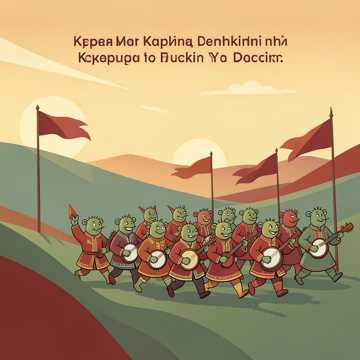
Гей Долиною
Натхненна козацька народна пісня про похід запорізького війська під проводом легендарних отаманів. Маршовий ритм, спільний спів і традиційне звучання передають відчуття братерства, звитяги, гумору та історичної спадщини України.
02:20
5 days ago

Tears of the Queen
An epic rock hymn set during the fall of an empire, blending sacred Byzantine imagery with emotional resilience. Through soaring duets, chants, and cinematic guitars, the song transforms grief, faith, and survival into a powerful anthem of spiritual rebirth.
06:27
Invalid date

Gate of Theotokos
An epic sacred-rock lament about the fall of Constantinople, blending Byzantine spirituality with arena-sized 80s ballad power. Through mourning chants, soaring duets, and apocalyptic imagery, the song transforms historical tragedy into a timeless vow of faith, memory, and resilience.
04:42
Invalid date

Г
Історична народна композиція про козаків, їхню мужність, братерство та боротьбу за волю України. Пісня поєднує героїчний настрій, ностальгію за домом і традиційне українське народне звучання.
03:01
5 days ago
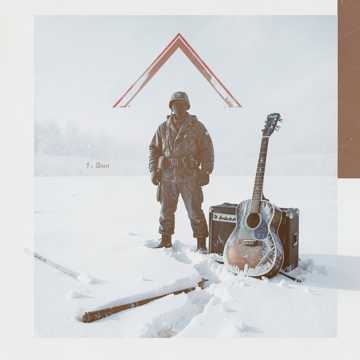
СУДЬБА РУССКОГО СОЛДАТА
Трагическая история русского солдата, его жертвы и материнской любви на фоне войны, передающая боль утраты, героизм и неизбежность судьбы.
03:01
Invalid date

Aegina Bells
A dark and emotional rock ballad mourning the fall of a sacred city while clinging to faith, memory, and eventual return. Byzantine chants, dramatic duet vocals, and cathedral-like production create a powerful atmosphere of grief, devotion, and defiant hope.
06:05
Invalid date
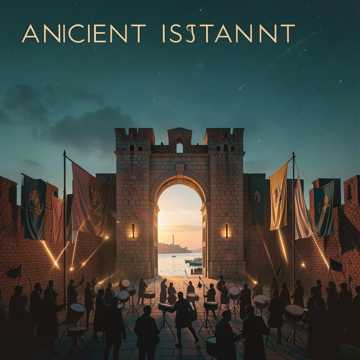
1453 Kapısı
1453 Kapısı, İstanbul'un fethini destansı bir anlatımla işleyen, halk ezgileriyle modern folk-pop marş enerjisini birleştiren güçlü bir eser. Davul ritimleri, toplu koro vokalleri ve sinematik yükselişleriyle tarihsel gurur ve kolektif hafızayı yansıtır.
03:18
Invalid date

ЧапАевск
Песня воспевает Чапаевск как город-труженик и символ военной мощи России. Через образы заводов, снарядов и героических людей раскрывается история поколений, стойкость рабочего класса и глубокая любовь автора к родному краю.
03:03
6 days ago

оля
Торжественная патриотическая композиция о мужестве предков, памяти павших солдат и любви к России. Мощный мужской дуэт, величественный хор и оркестровое звучание создают эмоциональную и вдохновляющую атмосферу.
03:20
6 days ago

Tulusing niat suci
Lagu iki nyritakake perjuangan kesatria kanthi niat suci mbabat alas peteng dadi papan panguripan lan sembahyang. Nggambarake rasa syukur, warisan leluhur, lan berkah Gusti kanthi nuansa melankolis lan tradisional Jawa.
04:35
6 days ago

Оля
Торжественная патриотическая композиция, посвящённая подвигу предков, памяти павших солдат и любви к России. Мощный хор, оркестровые аранжировки и эмоциональные мужские вокалы создают атмосферу героизма, скорби и национальной гордости.
05:06
6 days ago
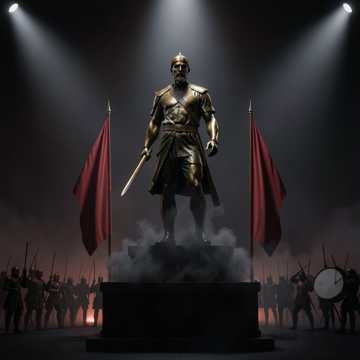
Our Army
A forceful military anthem celebrating unity, sacrifice, discipline, and national pride through marching rhythms, commanding vocals, and dramatic orchestral intensity inspired by historical European military traditions.
01:49
Invalid date
T
A rugged and energetic sea shanty celebrating the hardship, brotherhood, and longing of sailors journeying toward South Australia. Through powerful call-and-response vocals and rhythmic chants, the song evokes life aboard a 19th-century sailing vessel.
02:03
6 days ago
T
A fierce traditional-style sea shanty telling the tale of a sailor's rough encounter with the notorious Black Ball Line. Driven by stomping rhythms, roaring male vocals, and gritty call-and-response chants, the song captures the harsh camaraderie and dangers of maritime life.
02:50
6 days ago

T
A fierce traditional-style sea shanty telling the tale of a sailor's rough encounter along Winchester Street, delivered through aggressive call-and-response vocals, stomping rhythms, and gritty maritime energy inspired by 1870s Liverpool dock culture.
02:16
6 days ago

29
Песня раскрывает противоречивый путь Абылая — от раба и скитальца до властителя степи. На фоне холодного drift phonk-звучания звучит суровое наставление о власти, происхождении, войне и цене народного единства.
02:36
6 days ago

T
A roaring high-energy sea shanty about sailors leaving home for the great South Land, chasing gold, adventure, and freedom through stormy oceans. Packed with thunderous chants, raw vocals, and Irish folk spirit, the song captures camaraderie, hardship, and fearless maritime ambition.
03:44
6 days ago

T
A high-energy sea shanty celebrating migration, adventure, and brotherhood across stormy oceans. Driven by roaring male choruses, stomping rhythms, and Irish folk influence, the song captures the fearless spirit of sailors bound for Australia's legendary Great South Land.
05:10
6 days ago

Dòng Sử Mở
Bài hát mang tinh thần sử thi hiện đại, kể về hành trình gìn giữ ngọn lửa niềm tin qua những biến động lịch sử. Âm hưởng orchestral sâu lắng cùng ca từ giàu hình ảnh tạo cảm giác vừa hoài niệm vừa hướng tới tương lai.
03:55
6 days ago
Che Guevara
Lagu ini mengangkat kisah Che Guevara sebagai simbol revolusi, menampilkan keberanian, idealisme, dan perjuangan rakyat, dibalut Latin Alternative Rock yang membakar semangat.
04:38
6 days ago
Historical music refers to compositions that are inspired by, or reflect, historical periods, events, or cultural movements. It draws from a wide range of traditions, often using historical instruments, musical forms, and stylistic approaches to recreate the soundscape of specific time periods. The genre emerged as a distinct style in the late 19th and early 20th centuries, particularly within the realm of classical music, as composers sought to evoke or commemorate historical events. Over time, historical music expanded to include other genres such as film scores, opera, and even modern electronic compositions, each drawing on the past in unique ways. Historical music serves both as a reflection of cultural identity and as an educational tool, helping listeners experience the music of eras long gone.
Sub-tags and Classifications of Historical Music
Baroque Revival
Baroque Revival music draws inspiration from the Baroque period (1600-1750), characterized by ornate and expressive compositions. This sub-tag includes the use of Baroque instruments such as the harpsichordHistorical Music Content Creation and violins, and compositions often feature complex counterpoint and rich ornamentation. Composers within this classification may either directly recreate Baroque compositions or fuse them with modern techniques.
Medieval Music
Medieval music spans the years 500-1400 AD, featuring early polyphonic structures and Gregorian chants. Historical works in this category aim to replicate the modal scales, harmonies, and instruments of the time, such as the lute, organ, and various wind instruments. Medieval music also often involves chanting and plainsong, which form the foundation of Western sacred music.
Renaissance Music
Renaissance music (1400-1600) emerged with a focus on harmony, the use of polyphony, and the development of instrumental music. Historical compositions in this sub-tag often emphasize vocal harmony and imitation between voices, reflecting the sophisticated social and cultural developments of the time. Key instruments include the viol, recorder, and early keyboards.
Classical Period Music
The Classical period (1750-1820) in music introduced clarity, balance, and form, with composers focusing on structural precision. Historical compositions in this sub-tag are often associated with composers like Mozart, Haydn, and Beethoven. These works feature a clear melody with accompaniment, structured movements, and an overall elegance that reflects the intellectual spirit of the Enlightenment.
Film Score Historical Music
Film score historical music draws on the musical styles of past eras to set the mood and context in historical films. This sub-tag blends classical compositions and modern film scoring techniques, often incorporating orchestral arrangements and period-specific instrumentation to enhance the storytelling of historical films, documentaries, and period dramas.
Famous Artists and Works in Historical Music
John Williams
John Williams is a prominent film composer known for his work on historical films such as 'Schindler's List' and 'Lincoln.' His compositions often incorporate historical themes and orchestral elements that evoke the emotional weight of past events. Williams' music is celebrated for its powerful narrative quality, using music to deepen the connection to historical moments.
Beethoven's 'Eroica' Symphony
Beethoven's 'Eroica' Symphony, written in 1803, is often considered one of the defining works of the Classical period. This symphony was originally dedicated to Napoleon Bonaparte, but Beethoven later withdrew this dedication, reflecting the changing political landscape of the time. 'Eroica' is revolutionary in its size, structure, and emotional depth, representing the spirit of heroism and the tumultuous events of the Napoleonic era.
Carl Orff
Carl Orff's 'Carmina Burana' is a landmark piece often associated with historical themes, especially medieval and medieval-inspired works. Orff's incorporation of chant, folk melodies, and ancient texts creates a powerful emotional atmosphere that resonates with audiences. His innovative use of rhythmic structure and choral music made 'Carmina Burana' one of the most famous historical-themed classical works.
Tchaikovsky's '1812 Overture'
Tchaikovsky's '1812 Overture' commemorates the Russian victory over Napoleon's forces in 1812. The piece is famous for its inclusion of cannon fire and church bells, used to evoke the historical events of the time. The overture combines patriotic themes with a dramatic, almost cinematic flair, capturing the tension and triumph of this pivotal moment in history.
Benjamin Britten
Benjamin Britten's works, particularly 'War Requiem,' are known for their deep engagement with historical themes, particularly the impact of war. Britten’s approach blends historical context with modern techniques, highlighting the emotional toll of historical events. His compositions often reflect a nuanced understanding of history, blending classical traditions with contemporary sensibilities.
Holst's 'The Planets'
While not strictly historical in the traditional sense, Gustav Holst’s 'The Planets' (1914-1917) is often interpreted as a reflection on the human experience of war and exploration, both of which were prominent themes in the early 20th century. The suite’s movements evoke various astrological symbols, and the powerful 'Mars, the Bringer of War' is particularly celebrated for its historical resonance with World War I.
Applications of Historical Music in Various Scenarios
Historical music is widely used in film soundtracks to evoke the atmosphere and emotional tone of a specific time period. For example, the use of historical music in epic films such as 'Gladiator' or 'Braveheart' helps bring the ancient world to life, immersing the audience in the sounds and cultural context of that era. The music often incorporates period instruments or styles to enhance the realism and emotional impact of the film.
Film Soundtracks
Historical music plays a crucial role in video games that explore past events or civilizations, such as in titles like 'Assassin's Creed' or 'Total War.' These games use historical music to create immersive soundscapes that transport players into different time periods, enhancing the player's experience with authentic musical styles from the game’s setting.
Video Games
Advertisers often use historical music to evoke nostalgia or a connection to past events. For example, a commercial set in the 1960s might use popular music from that era to draw on the cultural and emotional associations of the time. This use of historical music helps connect brands with a sense of tradition and legacy.
Advertising and Commercials