
Free Impressionistic Music Generator Powered by AI
Turn text into high-quality Impressionistic music effortlessly – no login required!

music.toolTips
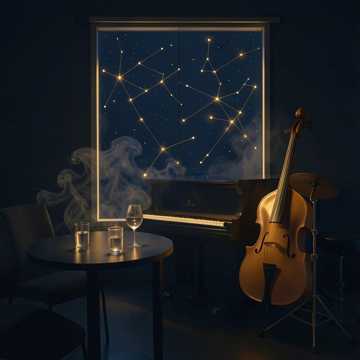
Entre Copos e Constelações
A lush jazz ballad featuring intimate piano, airy vocals, and orchestral elements, unfolding with emotional depth. The piece captures moments of quiet reflection, then builds into rich harmonies, offering a mix of jazz sophistication and cinematic beauty.
03:30
2 days ago

Вау
Песня 'Вау' исследует гнев и презрение к тирании, сочетая хаотичные природные звуки с психоделической музыкальной структурой, вызывая эмоциональное погружение и медитативное созерцание.
01:12
6 days ago
Impressionistic Music: Definition, History, and Characteristics
Impressionistic music refers to a style of music that emerged in the late 19th and early 20th centuries, primarily in France, influenced by the broader impressionist movement in the visual arts. The term 'impressionism' was coined to describe music that focuses on mood, atmosphere, and subtle nuance rather than traditional formal structures. Key characteristics include the use of unconventional scales such as the whole-tone scale, innovative harmonies, and a focus on timbre and orchestral color. It is also characterized by its departure from classical forms and a preference for open-ended, non-linear structures.
Sub-tags and Classifications of Impressionistic Music
Early Impressionism
Early Impressionism in music, predominantly in the works of composers like Claude Debussy, marked a break from traditional romanticism. It features vague, atmospheric textures and a focus on mood and color rather than structure. Early pieces often experiment with unusual scales and instrumental combinations.
Late Impressionism
Late Impressionism represents the evolution of the style, incorporating more dramatic harmoniesImpressionistic music overview and an increased complexity of orchestration. Composers like Maurice Ravel embraced this period, blending impressionistic elements with more classical techniques, leading to more defined yet still fluid musical statements.
Impressionistic Piano Music
Impressionistic piano music explores unconventional harmony and timbre, often featuring textures that evoke nature, light, and the passage of time. Composers like Debussy's 'Préludes' or Ravel's 'Gaspard de la nuit' are key works in this sub-genre, pushing the boundaries of the piano as an instrument.
Impressionistic Orchestral Music
Impressionistic orchestral music often utilizes rich orchestral colors and innovative instrumental techniques. Composers such as Debussy and Ravel pushed orchestration to new limits, focusing on atmospheric effects rather than thematic development. Their works often depict natural scenes or evoke specific moods, such as Debussy’s 'La Mer' or Ravel’s 'Daphnis et Chloé.'
Famous Artists and Iconic Works in Impressionistic Music
Claude Debussy
Claude Debussy is often considered the father of impressionistic music. His works, such as 'Clair de Lune,' 'Prélude à l'après-midi d'un faune,' and 'La Mer,' showcase the core features of impressionism: atmospheric soundscapes, use of non-traditional scales, and innovative harmonic techniques. Debussy’s music broke away from the structured forms of the Romantic period and focused on evoking emotions and sensory experiences.
Clair de Lune (Debussy)
One of Debussy’s most famous piano pieces, 'Clair de Lune' is emblematic of impressionistic music. Its delicate use of the whole-tone scale creates an ethereal atmosphere, evoking moonlight reflected on water. The piece’s flowing rhythms and subtle dynamic shifts illustrate Debussy’s ability to create an immersive sound world that evokes emotion without relying on traditional melodic development.
Maurice Ravel
Maurice Ravel, a leading figure in French Impressionism, is known for his lush orchestration and exquisite sense of color. His famous works such as 'Boléro,' 'Daphnis et Chloé,' and 'Pavane pour une infante défunte' incorporate rhythmic precision with lush harmonic textures. Ravel’s style is often more structured than Debussy’s, blending impressionistic elements with classical forms.
La Mer (Debussy)
'La Mer' is a groundbreaking orchestral work that captures the vastness and unpredictability of the sea. Through innovative orchestration, Debussy evokes the sounds of crashing waves, distant storms, and peaceful horizons. The work is a masterclass in color, texture, and atmospheric music, capturing the essence of impressionism in the orchestral world.
Erik Satie
Erik Satie, although often considered a precursor to impressionism, influenced the movement with his unique minimalism and unconventional approach to composition. His works, such as 'Gymnopédies' and 'Gnossiennes,' offer simplicity, introspection, and a new way of thinking about texture and atmosphere in music.
Boléro (Ravel)
Ravel’s 'Boléro' is a hypnotic, repetitive piece that builds in intensity over its duration. The piece features a single, unchanging melody that is passed around the orchestra, showcasing Ravel’s genius in orchestration and rhythm. While not traditionally 'impressionistic' in form, 'Boléro' is an iconic work of early 20th-century music, celebrated for its innovation and mastery of orchestral color.
Application Scenarios for Impressionistic Music
Impressionistic music is often used in film scores to evoke a specific atmosphere or mood. For example, in films that feature natural landscapes or dreamlike sequences, composers may use impressionistic techniques to enhance the visual experience. The subtle harmonies and rich textures of Debussy’s works are frequently employed to evoke calm or to suggest an ethereal, otherworldly presence in cinema.
Movie Soundtracks
In advertising, impressionistic music can be used to create a sense of luxury, tranquility, or sophistication. The fluid, atmospheric qualities of impressionistic music make it ideal for ads that want to suggest elegance or evoke specific emotional responses from viewers, particularly in luxury goods or wellness sectors.
Advertising Music
Impressionistic music is also utilized in video game soundtracks, particularly in games that explore fantasy worlds or require immersive, mood-setting background music. The use of impressionistic music in game soundtracks, such as in the 'Final Fantasy' series, creates immersive environments where the player can experience the game's world through its soundscape, enhancing emotional depth and narrative tone.
Video Game Background Music