Free Tape delay Music Generator Powered by AI
Turn text into high-quality Tape delay music effortlessly – no login required!

music.toolTips
Theremin Over Ashes
An instrumental descent into distorted atmospheres and unstable grooves, blending grunge grit with ambient psychedelia. Theremin textures, live-band swing, and shifting meters create a smoky, cinematic experience filled with tension, collapse, and hypnotic momentum.
06:39
9 hours ago

Steam Count
An instrumental funk disco track driven by pulsing bass, clipped guitar, and workout-style chants. Steam effects, tape-delay accents, and intimate production create a tense yet addictive atmosphere that feels cinematic, underground, and physically charged.
08:00
15 hours ago

Cicatriz de Acero
Una pieza instrumental de rock y R&B lento que transmite dolor contenido, resiliencia y reflexión íntima mediante guitarras expansivas, bajos cálidos y una progresión emocional que crece hasta un cierre poderoso y melancólico.
04:38
1 days ago
Backroom Echo
'Backroom Echo' is a spacious instrumental dub experience built on slow offbeat guitar, weighty bass, and blooming tape delays. Minimal verses evolve into immersive drops with horn stabs, ghostly echoes, and smoky, deep rhythmic textures.
04:43
1 days ago
Concrete Rain Loop
An instrumental dub techno excursion built on swung four-on-the-floor rhythms, foggy chords, and blooming sub bass. The track evolves from sparse urban minimalism into a wider, emotionally charged return filled with glowing echoes and immersive spatial depth.
03:54
1 days ago
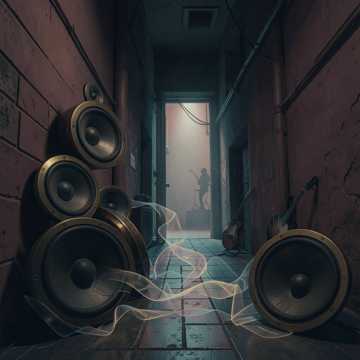
Sine Bass Dubplate
A 1970s-inspired reggae dub journey with deep, sustained bass, skanking guitars, and echo-laden dub textures that oscillate between stripped-down verses and full, chest-rattling grooves.
04:00
5 days ago
Tape Delay: Definition and History of This Classic Audio Effect
Tape Delay is an audio effect that creates a delayed repetition of sound using magnetic tape technology. It produces echoes and spatial depth by recording an audio signal onto tape and then playing it back after a short interval, often with adjustable feedback and delay time. Originating in the 1950s and 1960s, Tape Delay was initially developed as a studio effect for experimental music and early rock recordings. Early pioneers such as Les Paul and engineers at EMI developed tape echo machines that allowed musicians to manipulate delay times, creating the warm, analog repetition that digital delays later sought to emulate. Throughout the 1970s and 1980s, Tape Delay became a staple in psychedelic rock, dub, reggae, and electronic music, valued for its rich, slightly degraded sound that adds character and atmosphere to recordings.
Tape Delay Sub-tags and Classifications
Analog Tape Delay
Analog Tape Delay refers to traditionalTape Delay Overview tape-based delay machines that use magnetic tape loops to create delayed sound. These units often provide warm, organic repeats and slight modulation artifacts, giving the sound a natural, musical texture. Examples include the classic Roland RE-201 Space Echo and the Echoplex EP-3. Analog Tape Delay is prized for its ability to create a vintage, immersive echo effect in recordings and live performances.
Digital Tape Emulation Delay
Digital Tape Emulation Delay replicates the characteristic sound of analog tape delays using modern digital processing. These plugins and digital pedals simulate tape saturation, wow-and-flutter, and natural tape degradation, offering the tonal qualities of classic tape delays with the precision and flexibility of digital technology. They are widely used in contemporary music production for both studio and live applications.
Multi-head Tape Delay
Multi-head Tape Delay uses multiple playback heads to produce complex echo patterns, including stereo and cascading repeats. This classification allows for intricate rhythmic textures and soundscapes, often used in dub, reggae, and experimental music. By adjusting the spacing and timing of the heads, musicians can achieve unique delay sequences that interact dynamically with the original signal.
Feedback-Controlled Tape Delay
Feedback-Controlled Tape Delay emphasizes the use of feedback loops to create sustained or self-oscillating echoes. By feeding the delayed signal back into the input, the effect can produce infinite repeats or gradually decaying echoes, adding depth and motion to the music. This type of Tape Delay is popular in psychedelic, ambient, and electronic genres for its ability to create evolving sound textures.
Famous Artists and Works Related to Tape Delay
Brian Eno
Brian Eno, a pioneer of ambient music, extensively used Tape Delay to create lush, evolving soundscapes. Works like 'Discreet Music' and 'Ambient 1: Music for Airports' feature subtle, layered tape delay effects that add depth and texture, influencing generations of electronic and ambient musicians.
'Echoes' by Pink Floyd
'Echoes' is a progressive rock masterpiece that demonstrates the expressive use of Tape Delay. The track features cascading echoes and spatial effects that enhance its ambient passages. The tape delay contributes to the ethereal atmosphere, allowing sound to evolve and interact dynamically across the stereo field.
Dub pioneers (King Tubby & Lee 'Scratch' Perry)
King Tubby and Lee 'Scratch' Perry revolutionized reggae and dub music through creative use of Tape Delay. They transformed studio mixing consoles into live instruments, using feedback, multi-head delays, and rhythmic echoes to craft iconic tracks like 'King Tubby Meets the Rockers Uptown,' shaping the sound of dub worldwide.
'Disco Inferno' by The Trammps
'Disco Inferno' incorporates Tape Delay effects in its rhythm guitar and vocal lines to create a spacious and driving disco groove. The subtle echoes reinforce the danceable beat while adding an immersive sonic layer, illustrating Tape Delay's versatility across genres.
The Edge (U2)
The Edge is renowned for his signature guitar sound, heavily reliant on Tape Delay. Tracks like 'Where the Streets Have No Name' showcase rhythmic delay patterns that define U2's atmospheric rock style, demonstrating the creative use of tape echoes in mainstream music.
'King Tubby Meets the Rockers Uptown' by Augustus Pablo & King Tubby
This track is a landmark in dub music, featuring heavy use of Tape Delay to manipulate instrumental tracks. The delayed echoes create tension and space, emphasizing percussive and melodic elements. The innovative application of tape delay techniques set a new standard for remixing and studio experimentation.
Dubstep and electronic producers
Modern electronic producers frequently utilize digital Tape Delay emulations to add warmth, depth, and movement to their tracks. Artists like Flying Lotus and Aphex Twin use tape-style delays to create intricate textures in electronic, experimental, and IDM music.
Application Scenarios of Tape Delay Music
Tape Delay is widely used in film scoring to create atmospheric depth and tension. Echoed piano, guitar, or synth lines can enhance suspense, evoke nostalgia, or generate dreamlike soundscapes, making it a favorite tool for composers in cinematic contexts.
Movie Soundtracks
In advertising, Tape Delay can add a sense of sophistication, warmth, or retro appeal to background music. By subtly echoing key melodic motifs, brands can create memorable audio signatures that resonate with listeners emotionally.
Advertising Music
Video game soundtracks often employ Tape Delay to enrich environmental sounds or musical cues. The delayed echoes can simulate expansive spaces, enhance immersion, or give audio elements a dynamic, interactive quality, particularly in adventure and atmospheric games.
Game Background Music
Musicians frequently use Tape Delay pedals and units in live performances to create spatial effects, rhythmic textures, and immersive soundscapes. Guitarists, keyboardists, and vocalists can layer echoes in real-time, adding depth and complexity to live arrangements.
Live Performances
Tape Delay is an essential tool in electronic music production for creating textures, stereo width, and rhythmic interest. Producers use it on synths, drums, and vocals to generate movement and dimension, often simulating vintage analog warmth digitally.
Electronic Music Production